
Paulo Wanchope built a reputation as one of the Premier League’s most unpredictable and entertaining strikers of the late 1990s and early 2000s, becoming a cult figure at Derby County, West Ham United, and Manchester City. Beyond his club career, he remains Costa Rica’s second-highest all-time goalscorer and one of the most recognizable footballing exports the country has ever produced.
Paulo Wanchope: Quick Facts
| Full Name | Paulo César Wanchope Watson |
| Date of Birth | July 31, 1976 |
| Age | 49 (as of 2026) |
| Place of Birth | Heredia, Costa Rica |
| Nationality | Costa Rican |
| Profession | Football Coach; Former Professional Footballer (Striker) |
| Spouse/Partner | Brenda Carballo |
| Children | Reported to have a son and a daughter; details not independently confirmed |
| Years Active | 1993 – 2008 (playing); 2008 – present (coaching) |
| Education | Not publicly confirmed |
| Notable For | Premier League striker for Derby County, West Ham United, and Manchester City; Costa Rica’s second all-time leading goalscorer |
| Teams (Playing) | Herediano, Derby County, West Ham United, Manchester City, Málaga, Al-Gharafa, Rosario Central, FC Tokyo, Chicago Fire |
Quick Answer
Paulo Wanchope is a Costa Rican former footballer and current coach best remembered for his eight seasons in the English Premier League with Derby County, West Ham United, and Manchester City. A powerful, unpredictable striker, he scored 45 goals in 73 caps for Costa Rica — the second-highest total in national team history — and remains Costa Rica’s all-time leading World Cup scorer.
| Name | Quick Fact | Why He Matters |
|---|---|---|
| Paulo Wanchope | 45 international goals in 73 caps | Costa Rica’s second all-time top scorer and a Premier League cult hero |
Early Life
Paulo César Wanchope Watson was born on July 31, 1976, in Heredia, Costa Rica, into a footballing family. His father, Vicente Wanchope, nicknamed “La Gacela Negra” (The Black Gazelle), was a prolific striker for the Costa Rica national team and domestic clubs in the 1960s and 1970s, and his mother is Patricia Watson. Paulo’s two brothers, Javier and Carlos, also went on to play for the Costa Rica national team, making the Wanchopes one of the country’s most prominent footballing families across generations.
Education
There is no publicly confirmed record of Paulo Wanchope’s formal academic education. As with many Costa Rican footballers of his generation, his teenage years were centered on developing through his hometown club’s youth system rather than documented academic study, and no verified information exists about further education beyond secondary school.
Career Beginnings
Wanchope began his senior career with Herediano, his hometown club, in 1993, where he played until 1997 and established himself as a promising young striker in the Costa Rican Primera División. His performances at Herediano caught the attention of English clubs, and in 1997 he moved to Derby County alongside fellow Costa Rican international Mauricio Solís, becoming one of the first Costa Rican players to sign for a Premier League club.
Wanchope’s Derby debut on April 5, 1997, became instantly legendary: he scored a solo goal against Manchester United at Old Trafford, weaving past four defenders — including Ronny Johnsen, Phil Neville, and Gary Pallister — before beating goalkeeper Peter Schmeichel in a 3-2 win. The goal helped Derby register their first win at Old Trafford in seven years and was later voted the greatest goal in Derby County’s history as part of the club’s 125th-anniversary celebrations.
Career Milestones
Wanchope’s rise continued through the 1997–98 season, in which he scored 13 league goals to help Derby finish ninth in the Premier League — the club’s highest finish since 1989. He followed it with nine goals the next season as Derby finished eighth. After scoring 28 goals in 83 games for Derby, he was sold to West Ham United for £3.5 million in July 1999, where he formed a productive strike partnership with Paolo Di Canio and helped the club win the UEFA Intertoto Cup, scoring in the decisive second leg of the final against FC Metz to secure the trophy on aggregate.
In August 2000, Wanchope signed for Manchester City in a club-record £3.5 million transfer, going on to make 70 appearances and score 27 goals across four seasons in Manchester colors. He later had spells with Málaga in La Liga, Qatari club Al-Gharafa, Argentina’s Rosario Central, Japan’s FC Tokyo, and Chicago Fire in Major League Soccer before returning to Herediano and retiring from playing in 2008.
Internationally, Wanchope made his Costa Rica debut in 1996 and went on to earn 73 caps, scoring 45 goals — a tally that makes him the second-highest scorer in national team history, behind Rolando Fonseca. He scored against Brazil at the 2002 World Cup and twice against Germany at the 2006 World Cup, figures that make him Costa Rica’s all-time leading World Cup goalscorer, a record he shares with Rónald Gómez. His combination of size, technical touch, and unpredictability made him a difficult matchup for defenders throughout his international career, and he was widely regarded by Costa Rican fans as the most gifted forward of his generation.
After retiring as a player, Wanchope transitioned into coaching, starting with Herediano in 2008. He went on to serve as an assistant coach for the Costa Rica national team from 2010 to 2014 before being promoted to head coach, a role he held from 2014 to 2015. He subsequently managed Uruguay de Coronado, Cartaginés, Pérez Zeledón, and, most recently, Deportivo Saprissa in 2025, in addition to a second stint as a Costa Rica national team assistant coach from 2024 to 2025. Across these roles, Wanchope has become known for a possession-oriented coaching style that draws on his own experience as an attacking, creative player rather than a purely physical target man.

Paulo Wanchope
Career Timeline · 1993 – 2025
Senior debut with hometown club Herediano
Derby County — legendary solo debut goal at Old Trafford, later voted the greatest in club history
West Ham United for £3.5m — wins UEFA Intertoto Cup, scores in the final
Manchester City club-record £3.5m transfer — 27 goals in 70 appearances
World Cup goal against Brazil
Two World Cup goals against Germany
Retires at Herediano — begins coaching career
Appointed head coach of the Costa Rica national team
Departs national team role
Returns as Costa Rica assistant coach
Takes charge of Deportivo Saprissa
Achievements
- Scored one of the most celebrated individual goals in Derby County history on his 1997 debut against Manchester United
- Helped West Ham United win the 1999 UEFA Intertoto Cup
- Costa Rica’s second all-time leading international goalscorer, with 45 goals in 73 caps
- Costa Rica’s all-time leading FIFA World Cup goalscorer (shared record)
- Scored against Brazil at the 2002 World Cup and twice against Germany at the 2006 World Cup
- Named a City Football icon by Manchester City for his cult-hero status among fans
- Served as Costa Rica national team head coach (2014–2015)
- Recognized by Manchester City as one of the club’s most memorable modern-era signings, despite a relatively brief four-season stay
Personal Life
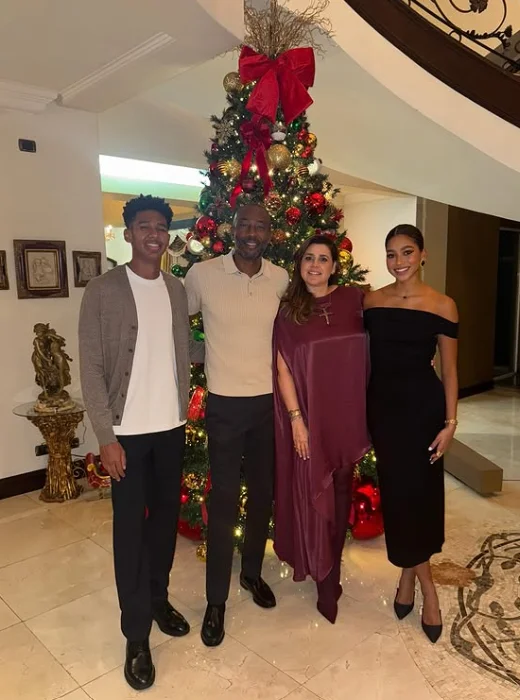
Wanchope is married to Brenda Carballo, and reports indicate the couple has a son and a daughter, though further details about the family have not been independently confirmed through primary sources. Football has run through Wanchope’s family across three generations: his father Vicente was a Costa Rica international in his own right, and his brothers Javier and Carlos also represented the national team, giving the Wanchope name a lasting place in Costa Rican football history. Since retiring as a player, Wanchope has remained a prominent public figure in Costa Rica, moving between club and international coaching roles and occasionally expressing interest in returning to work with the Costa Rican Football Federation in a sporting-director capacity. He has also remained a familiar presence in English football media, regularly returning for interviews with Manchester City and West Ham United around matches between the two clubs, where he reflects on his time in England with evident affection for both sets of supporters.
Controversies
There is no substantiated record of major personal or off-field controversy involving Paulo Wanchope. The more notable disputes in his career have been footballing in nature — such as his 2015 departure as Costa Rica’s national team head coach amid results-driven pressure — rather than personal scandal, and his public image in both England and Costa Rica has remained largely defined by his playing style and coaching career rather than controversy.
Related: Famous Celebrities in Costa Rica: The Complete List
Influence and Legacy Snapshot
| Category | Contribution |
|---|---|
| Premier League Pioneer | One of the first Costa Rican players to establish himself in the English top flight |
| Iconic Moment | Scored what Derby County fans voted the greatest goal in the club’s history |
| National Record | Costa Rica’s second all-time leading goalscorer and all-time leading World Cup scorer |
| Football Family | Third generation of Wanchopes to represent Costa Rica internationally |
| Post-Playing Career | Head coach of the Costa Rica national team and multiple domestic clubs |
Legacy
Paulo Wanchope is remembered in England as one of the most exciting and unpredictable forwards to play in the Premier League during its formative decades — a player capable of moments of individual brilliance that stood apart from the era’s more conventional target men. In Costa Rica, his legacy runs deeper still: as the country’s all-time leading World Cup scorer and second-highest overall goalscorer, he is frequently cited alongside Keylor Navas as one of Costa Rican football’s two most influential international ambassadors. His continued presence in the Costa Rican coaching setup, including his 2014–2015 tenure as national team head coach and his more recent work with Deportivo Saprissa, has extended his influence well beyond his playing days.
Manchester City in particular has continued to celebrate his time at the club, regularly featuring him in retrospective interviews and content marking his goals and his enduring popularity with supporters — a rare distinction for a player who spent only four seasons there. Derby County fans, too, still regard his 1997 debut goal as a defining moment in the club’s modern history, a testament to how a single moment of skill can outlast the trophies and statistics that typically define a footballer’s legacy.
Conclusion
From a footballing family in Heredia to a legendary solo goal against Manchester United and a Costa Rican World Cup scoring record that still stands, Paulo Wanchope’s career reflects both individual flair and lasting national significance. His transition into coaching, including a stint leading the Costa Rica national team, has kept him closely tied to the sport’s development in his home country long after his playing days ended, and his name continues to surface whenever Costa Rican football looks for its next generation of leadership.
Next In Your Reading: Keylor Navas: Biography, Career, Family, and Legacy
Frequently Asked Questions
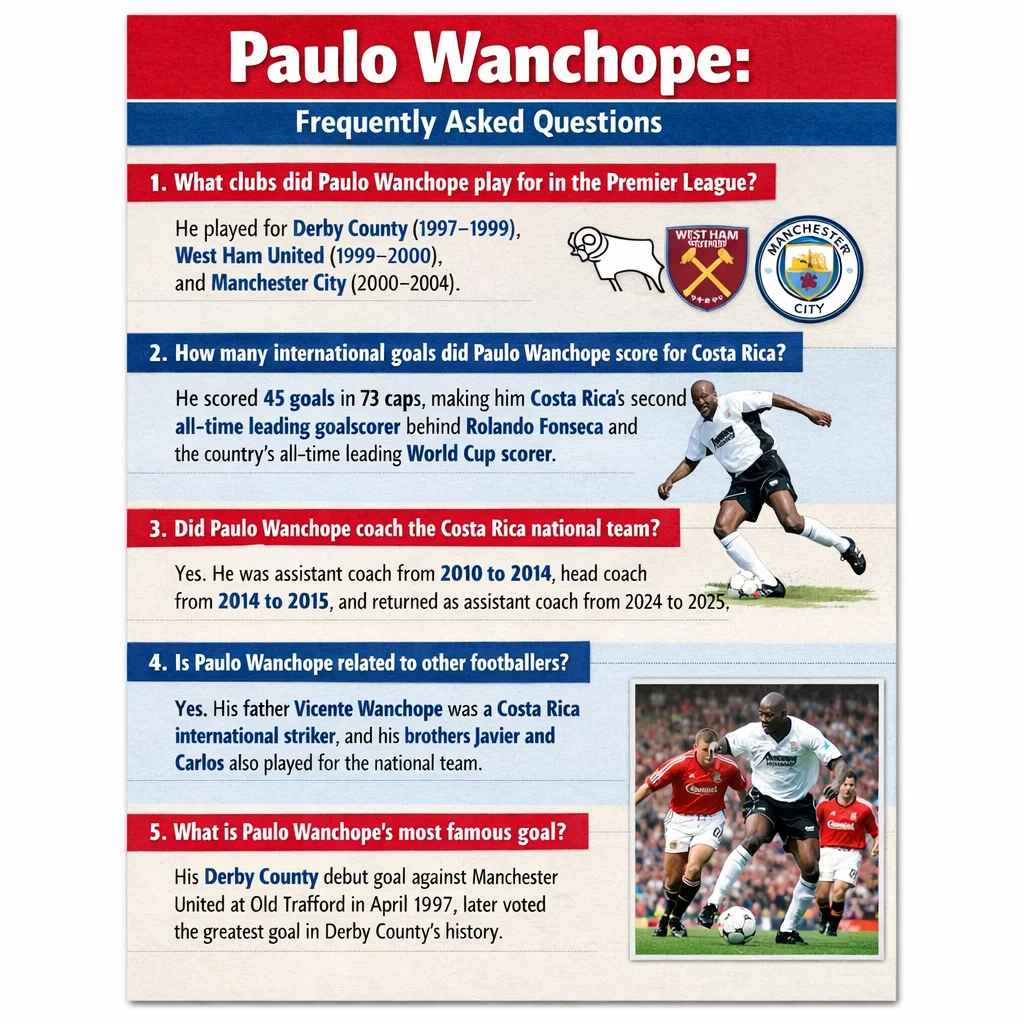
What clubs did Paulo Wanchope play for in the Premier League?
He played for Derby County (1997–1999), West Ham United (1999–2000), and Manchester City (2000–2004).
How many international goals did Paulo Wanchope score for Costa Rica?
He scored 45 goals in 73 caps, making him Costa Rica’s second all-time leading goalscorer behind Rolando Fonseca, and the country’s all-time leading World Cup scorer.
Did Paulo Wanchope coach the Costa Rica national team?
Yes. He served as an assistant coach from 2010 to 2014 before being promoted to head coach, a position he held from 2014 to 2015. He later returned as an assistant coach from 2024 to 2025.
Is Paulo Wanchope related to other footballers?
Yes. His father, Vicente Wanchope, was also a Costa Rica international striker, and his brothers Javier and Carlos both played for the national team as well.
What is Paulo Wanchope’s most famous goal?
His debut goal for Derby County against Manchester United at Old Trafford in April 1997, in which he beat four defenders before scoring, was later voted the greatest goal in Derby County’s history.