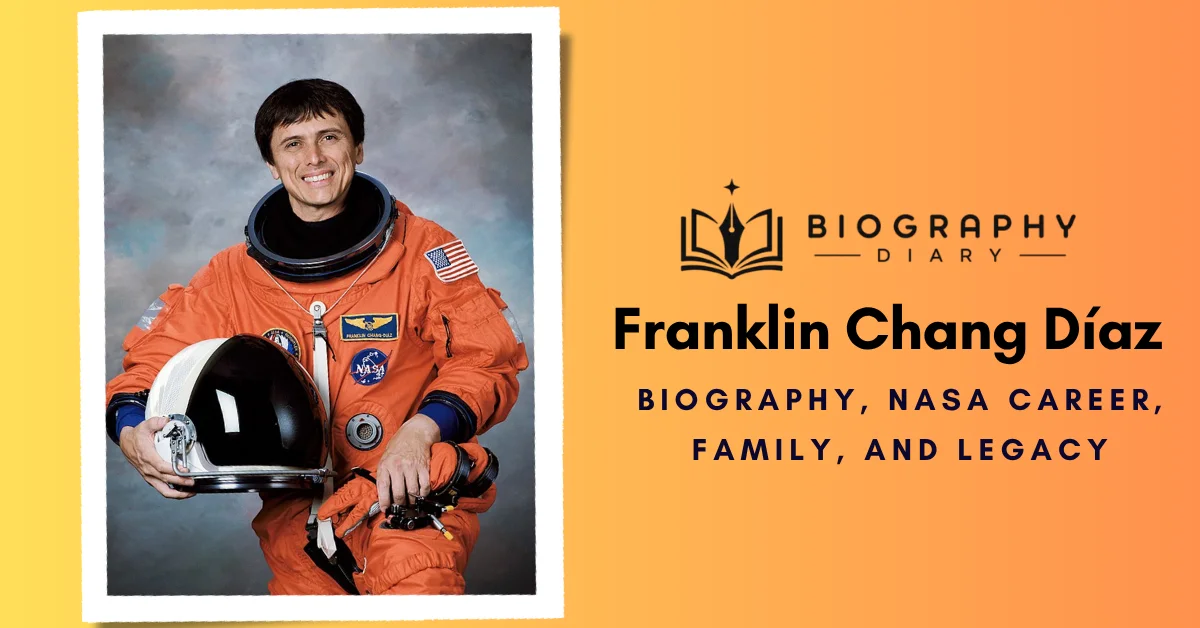
Franklin Chang Díaz became the first Latin American immigrant selected by NASA to fly into space, going on to complete seven Space Shuttle missions — a total that ties the world record for the most spaceflights by any astronaut. Widely regarded as Costa Rica’s most celebrated scientific figure, Chang Díaz has spent more than four decades at the intersection of astronaut service, applied physics research, and advanced rocket propulsion engineering.
Franklin Chang Díaz: Quick Facts
| Full Name | Franklin Ramón Chang-Díaz |
| Date of Birth | April 5, 1950 |
| Age | 76 (as of 2026) |
| Place of Birth | San José, Costa Rica |
| Nationality | Costa Rican-American (U.S. citizen since 1977) |
| Profession | Mechanical Engineer, Physicist, Former NASA Astronaut |
| Spouse | Dr. Peggy Marguerite Doncaster (married December 17, 1984); previously married to Candice “Canoce” Chang |
| Children | Four — two daughters from his first marriage (including Sonia Chang-Díaz) and two daughters with Peggy Doncaster |
| Years Active | 1980 – present |
| Education | B.S. in Mechanical Engineering, University of Connecticut (1973); Sc.D. in Applied Plasma Physics, MIT (1977) |
| Notable For | Tying the world record for most spaceflights (seven Space Shuttle missions); founder of Ad Astra Rocket Company |
Quick Answer
Franklin Chang Díaz is a Costa Rican-American physicist and former NASA astronaut who flew seven Space Shuttle missions between 1986 and 2002, tying the world record for the most spaceflights by an individual astronaut. He later founded Ad Astra Rocket Company to develop plasma-based rocket propulsion technology and is regarded as Costa Rica’s most celebrated scientific figure.
| Name | Quick Fact | Why He Matters |
|---|---|---|
| Franklin Chang Díaz | 7 Space Shuttle missions | First Latin American immigrant selected by NASA to fly into space |
Early Life
Franklin Ramón Chang-Díaz was born on April 5, 1950, in San José, Costa Rica, to Ramón Ángel Chang Morales, an oil worker whose own father had fled China during the Boxer Rebellion, and María Eugenia Díaz. He was one of six children, and his mother and siblings continued to live in Costa Rica throughout his career. Chang Díaz spent part of his childhood in Costa Rica and Venezuela, and has said he developed his fascination with space exploration as a boy, inspired in particular by the early achievements of the American and Soviet space programs.
Education
Chang Díaz graduated from Colegio De La Salle in San José, Costa Rica, in November 1967. He then moved to the United States to complete his secondary education, graduating from Hartford Public High School in Hartford, Connecticut, in 1969. He went on to earn a Bachelor of Science degree in mechanical engineering from the University of Connecticut in 1973, followed by a Doctorate of Science in Applied Plasma Physics from the Massachusetts Institute of Technology (MIT) in 1977. He became a naturalized citizen of the United States in 1977, the same year he completed his doctorate.
Career Beginnings
After completing his doctorate, Chang Díaz joined the Charles Stark Draper Laboratory as a researcher from 1977 to 1983, working on the design of compact fusion reactors for space propulsion systems. He applied to NASA’s astronaut program and was selected in May 1980 as part of NASA Astronaut Group 9, becoming an astronaut in August 1981 following the completion of his training. During his early years at NASA, he was involved in flight software checkout at the Shuttle Avionics Integration Laboratory and participated in early space station design studies. In late 1982, he was designated support crew for the first Spacelab mission, and in 1985 he led the astronaut support team at Kennedy Space Center, overseeing crew support during vehicle processing and launch countdowns.
Career Milestones
Chang Díaz achieved his first spaceflight on January 12, 1986, aboard Space Shuttle Columbia on mission STS-61-C, a six-day mission that deployed the SATCOM KU satellite and conducted multiple scientific experiments. Following the loss of Space Shuttle Challenger just weeks later, in January 1986, the shuttle program was grounded for nearly three years, delaying his subsequent flights. He went on to fly six additional Space Shuttle missions once the program resumed, spread across the following sixteen years: STS-34 (1989), STS-46 (1992), STS-60 (1994), STS-75 (1996), STS-91 (1998), and STS-111 (2002). His seventh flight, in 2002, tied the record for the most spaceflights by any astronaut at the time. Across his seven missions, he logged more than 66 days in space and performed three spacewalks totaling over 19 hours.

Alongside his astronaut duties, Chang Díaz continued his research into applied plasma physics and its potential applications for rocket propulsion. In 1979, he had conceived the theoretical basis for what would become the VASIMR (Variable Specific Impulse Magnetoplasma Rocket) engine, a concept that has since been embodied in three NASA patents bearing his name. In 1993, he founded and directed the Advanced Space Propulsion Laboratory at NASA’s Johnson Space Center, leading a multi-center research team developing this propulsion technology for potential use in future deep-space missions, including crewed flights to Mars.
On July 8, 2005, after 25 years of government service, Chang Díaz retired from NASA to continue developing VASIMR technology in the private sector. He founded Ad Astra Rocket Company, where he serves as Chairman and CEO, continuing to lead research into plasma propulsion systems intended to dramatically reduce travel times for deep-space missions. He has also served as an Adjunct Professor of Physics at both Rice University and the University of Houston, and sits on the board of directors of Cummins Inc.

Franklin Chang Díaz
Career Timeline · 1950 – 2026
Born in San José, Costa Rica
B.S. Mechanical Engineering, University of Connecticut
Sc.D. Applied Plasma Physics, MIT; becomes U.S. citizen
Selected in NASA Astronaut Group 9
First spaceflight — STS-61-C aboard Columbia
Founds Advanced Space Propulsion Laboratory at NASA Johnson Space Center
Seventh mission STS-111 — ties world record for most spaceflights
Retires from NASA; founds Ad Astra Rocket Company
Inducted into the U.S. Astronaut Hall of Fame
Continues as Ad Astra Chairman & CEO
Related: Famous Celebrities in Costa Rica: The Complete List
Achievements
- Tied the world record for most spaceflights, with seven Space Shuttle missions (1986–2002)
- First Latin American immigrant selected by NASA to fly into space; third Latin American astronaut overall
- Inducted into the NASA Astronaut Hall of Fame in 2012
- Holder of three NASA patents related to the VASIMR plasma rocket engine
- Recipient of seven NASA Space Flight Medals, two NASA Distinguished Service Medals, and three NASA Exceptional Service Medals
- Awarded the Liberty Medal by President Ronald Reagan at the Statue of Liberty Centennial Celebration in 1986
- Recipient of the Medal of Excellence from the Congressional Hispanic Caucus (1987)
- Holds numerous honorary doctorates from universities across the United States and Latin America
Personal Life
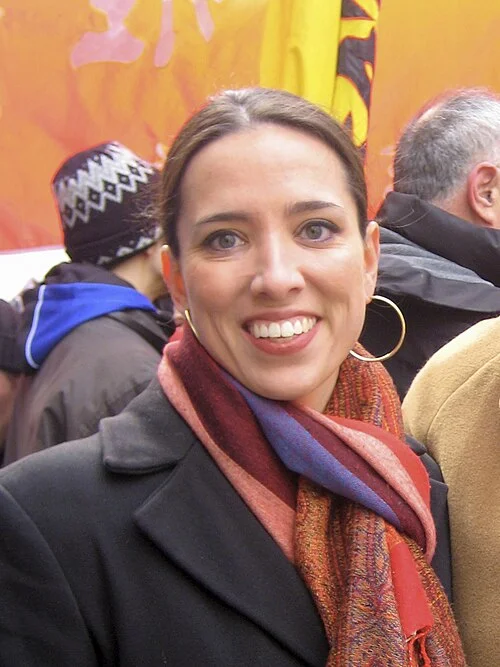
Chang Díaz was previously married to Candice “Canoce” Chang, with whom he has two daughters, including Sonia Chang-Díaz, who went on to serve in the Massachusetts State Senate until 2023.
On December 17, 1984, he married Dr. Peggy Marguerite Doncaster (née Stafford), of Alexandria, Louisiana, in the United States. The couple has two daughters together, both born in Houston, Texas, bringing Chang Díaz’s total to four children. Outside of his scientific work, he has cited interests including music, glider planes, soccer, scuba diving, and hiking. His mother and siblings remained based in Costa Rica throughout his career, and he has continued to describe the country as central to his identity even after decades of life and work in the United States.
Philanthropy and Public Service
Beyond his research work, Chang Díaz has been active in academic and civic life, including work early in his career as a house manager at an experimental community residence supporting the de-institutionalization of chronic mental health patients, and as an instructor and advisor with a rehabilitation program for Hispanic drug users in Massachusetts. In Costa Rica, his achievements have led to numerous national honors, and the country’s National High Technology Center (CeNAT) was named in his honor in recognition of his contributions to science and space exploration. He has also received honorary doctorates from multiple universities across Latin America, often using the associated ceremonies as opportunities to encourage students in the region to pursue careers in science, technology, engineering, and mathematics.
Controversies
There is no substantiated record of personal or professional controversy involving Franklin Chang Díaz. His public profile across more than four decades has centered consistently on his scientific and engineering achievements, his NASA career, and his continued advocacy for space exploration and propulsion research.
Influence and Legacy Snapshot
| Category | Contribution |
|---|---|
| Space Exploration Record | Tied the world record for most spaceflights, with seven Space Shuttle missions |
| Trailblazer | First Latin American immigrant astronaut selected by NASA |
| Scientific Innovation | Inventor of the VASIMR plasma rocket engine concept, now developed by Ad Astra Rocket Company |
| National Icon | Widely regarded as Costa Rica’s most celebrated scientific figure |
| Academic Legacy | Adjunct Professor of Physics at Rice University and the University of Houston |
Legacy
Franklin Chang Díaz’s career represents one of the most significant scientific contributions by any Costa Rican in history. His seven Space Shuttle missions placed him among an elite group of astronauts with the most spaceflight experience in NASA’s history, and his continued research into plasma rocket propulsion through Ad Astra Rocket Company keeps him at the forefront of technology aimed at making deep-space human exploration, including missions to Mars, more feasible. In Costa Rica, he is regarded as a national hero, credited with inspiring generations of students toward careers in science and engineering, and honored through institutions such as the CeNAT technology center that bears his name.
His trajectory — from a modest household in San José to the astronaut corps and, later, to leading a private aerospace company — is frequently held up in Costa Rican education as an example of what sustained investment in science and engineering study can achieve, regardless of a country’s size or resources. Internationally, his work on the VASIMR engine continues to be cited in discussions about the future of long-duration spaceflight, ensuring that his influence extends well beyond the astronaut missions that first made him famous.
Conclusion
From a childhood in San José shaped by an early fascination with space exploration to seven Space Shuttle missions and a career spent pushing the boundaries of rocket propulsion science, Franklin Chang Díaz’s life reflects both extraordinary individual achievement and a lasting connection to his Costa Rican roots. His ongoing work with Ad Astra Rocket Company continues to build on the scientific legacy he established during 25 years of NASA service, and his story remains one of the most frequently cited examples of Costa Rican achievement on the world stage.
Next In Your Reading: Paulo Wanchope: Biography, Career, Family, and Legacy
Frequently Asked Questions
How many space missions did Franklin Chang Díaz complete?
He completed seven Space Shuttle missions between 1986 and 2002, tying the world record for the most spaceflights by any individual astronaut at the time.
Was Franklin Chang Díaz the first Latin American in space?
He was the first Latin American immigrant selected by NASA to fly into space, and the third Latin American astronaut overall to do so.
What company did Franklin Chang Díaz found after leaving NASA?
He founded Ad Astra Rocket Company, where he serves as Chairman and CEO, developing the VASIMR plasma rocket engine for advanced space propulsion.
Is Franklin Chang Díaz still involved in space research?
Yes. He continues to lead Ad Astra Rocket Company’s development of plasma propulsion technology and holds academic positions as an Adjunct Professor of Physics at Rice University and the University of Houston.
Does Franklin Chang Díaz have family in politics?
Yes. His daughter, Sonia Chang-Díaz, served in the Massachusetts State Senate until 2023.